Address
No. 5-1, Jalan Seksyen 3/5, Taman Kajang Utama, 43000 Kajang, Selangor, Malaysia.
Phone
+603-8741 3878
+6019-867 8070
+6019-772 5297
Email
sales@vibrantecho.com
Address
No. 5-1, Jalan Seksyen 3/5, Taman Kajang Utama, 43000 Kajang, Selangor, Malaysia.
Phone
+603-8741 3878
+6019-867 8070
+6019-772 5297
Email
sales@vibrantecho.com

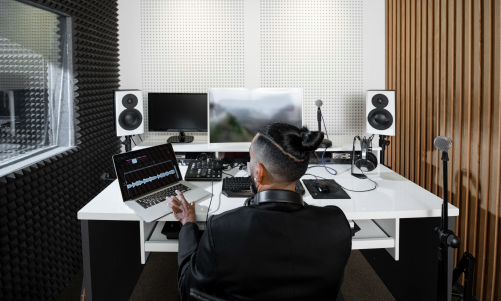
Whether you’re building a home studio, podcast room, or content creator space, acoustic panels are essential for getting that clean, clear sound. But here’s the secret: it’s not just what panels you use—it’s where you place them that makes all the difference.
In this guide, we’ll break down the best locations to install acoustic panels in your studio, why those spots matter, and how to maximize sound treatment without wasting money or materials.

A lot of beginners think adding more panels will automatically fix sound issues. But even 10 high-quality panels won’t help if they’re not placed correctly.
Strategic placement = better absorption + improved clarity + accurate mixing.

When sound leaves your speakers, it bounces off nearby walls before reaching your ears. These early reflections cause phase issues and muddiness.
What to do:
Use 2″ thick rigid panels on both left and right walls.

Sound doesn’t just go forward—it bounces off the back wall and returns to your ears, creating slapback echo.
Install panels or diffusers behind your chair to break or absorb these reflections.
Optional: If you mix often, use thicker panels or hybrid absorber-diffusers here.

This is a high-pressure zone, especially for bass build-up and flutter echoes.
Place panels directly behind your monitors, especially if they are near a wall.
Tip: Add bass traps in the corners to complement the panels.

Reflections from the ceiling can be just as disruptive as wall reflections.
Install cloud panels (horizontally suspended acoustic panels) directly above your mixing desk.
Benefit: Creates a “dead zone” above your listening area = better vocal and instrument clarity.

While not acoustic panels per se, corner treatment is critical in any serious setup.
Add bass traps or thicker panels in the corners (especially rear corners) to control low frequencies.

Acoustic Panel Placement Guide
Side Walls (Reflection Points)
Back Wall (Behind You)
Behind Speakers
Ceiling (Acoustic Cloud)
Pro Tip: Start small. Even 6 well-placed panels can make a big difference in a small studio setup.
Great sound doesn’t always require a big budget—but it does require smart placement. By targeting the key reflection and pressure points in your studio, you can get professional-level results, even in a small or semi-treated room.
Whether you’re mixing music, recording podcasts, or editing video, proper acoustic panel placement helps you hear accurately, mix better, and sound more polished.
